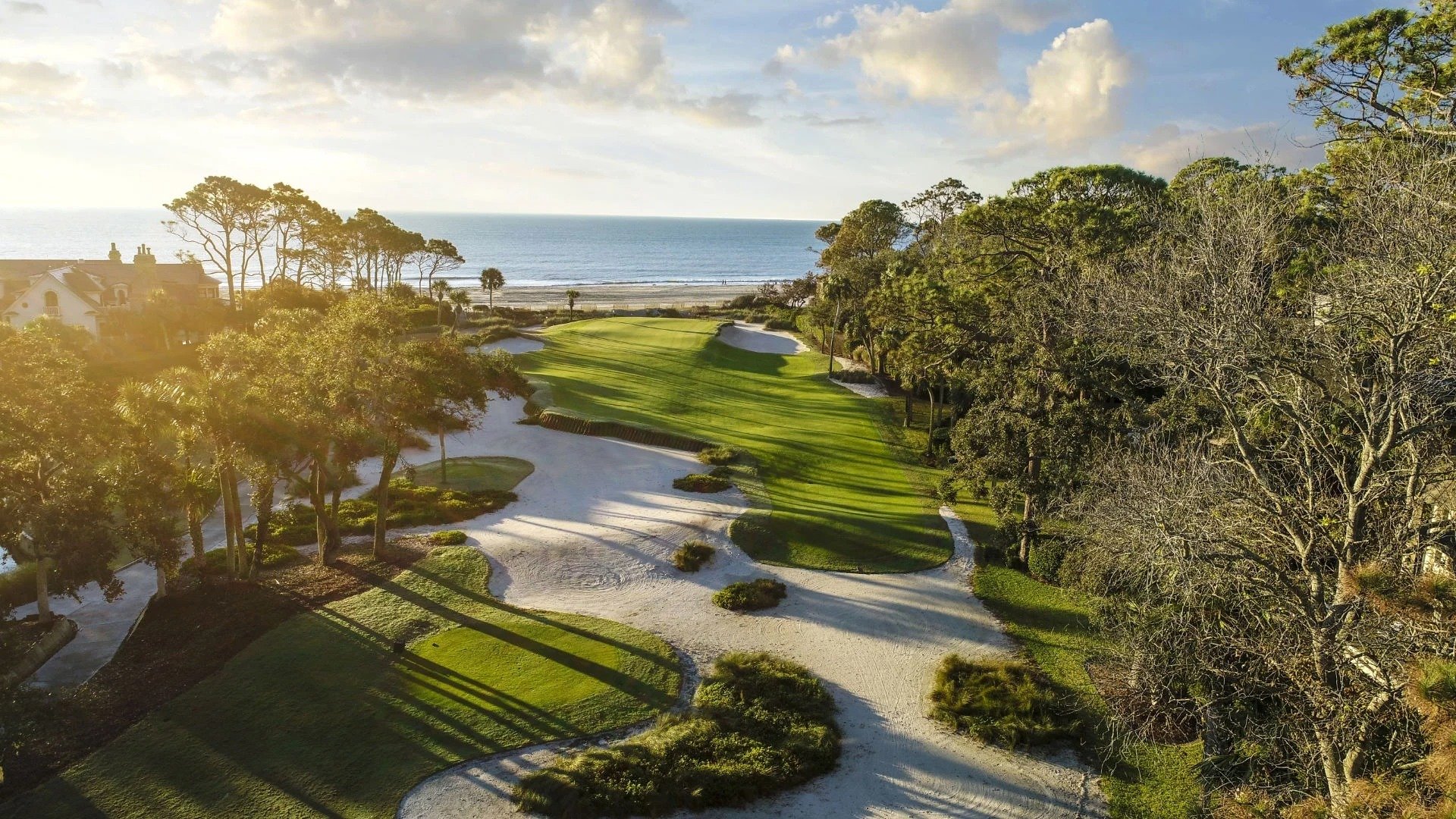
Love Atlantic Dunes by Davis Love III
Beyond the unparalleled golf experience it offers, Atlantic Dunes by Davis Love III lets you take your own shot at Hilton Head Island history. When Davis Love III and Love Golf Design were tasked with creating Atlantic Dunes in 2016, they did so with reverence to the course their new Atlantic Dunes was supplanting: the famed Ocean Course. The very first golf course built on Hilton Head Island, this 1961 George Cobb masterpiece had developed a fierce following over the decades. When it was announced that the venerable course was to be entirely redeveloped, more than a few local golfers were skeptical.
Their skepticism was short lived. Love Golf Design stayed true to the original routing that Cobb had mapped out through some of Sea Pines’ most alluring seaside scenery, enhancing play with better turf, updated shot values, and hole layouts more in tune with the modern game. Now more forgiving for the less experienced player, the broader appeal of Atlantic Dunes was quickly evident.
Installing thousands of indigenous plants, scaling back water hazards and installing new sand hills among the natural dunes, the team which included famed architect Scot Sherman, completely reenvisioned the Ocean Course into a perfect balance of challenging play and brilliant aesthetics. Even the devastating effects of Hurricane Mathew, which struck just a day before the course’s planned opening, couldn’t stop this new gem in Sea Pines crown from being named South Carolina’s Golf Course of the Year by NGCOA in its first year.
Preserving the Past
One of the major confinements Love faced in creating Atlantic Dunes was established real estate corridors that demanded hole layout stay essentially the same. But in that constraint, he found inspiration, shuffling up par sequences among holes (notably swapping the pars for 10 and 11, as well as 17 and 18) and clearing trees and ground to open up the natural features the course enjoyed. Drainage work that simply wasn’t possible when the course first opened in 1961 allowed the layout to better dry out. The elevated putting surfaces, a staple of older design, were lowered to natural grade and expanded, with bunkers scaled back to accommodate a broader range of golfers.
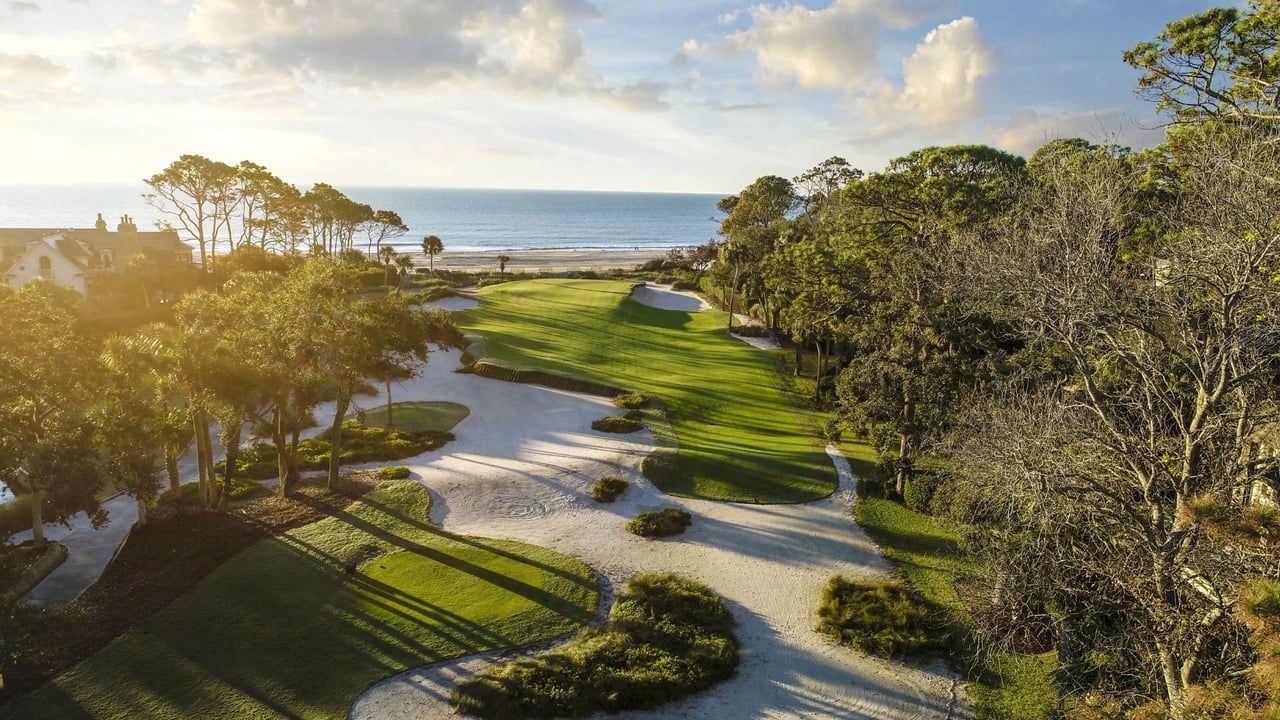
But he kept the seaside inspiration that had propelled the Ocean Course to fame. This is particularly evident on the 15th hole, an uphill par three that forces your shot up to the skyline and down toward dazzling views of the Atlantic Ocean.
Creating a New Future
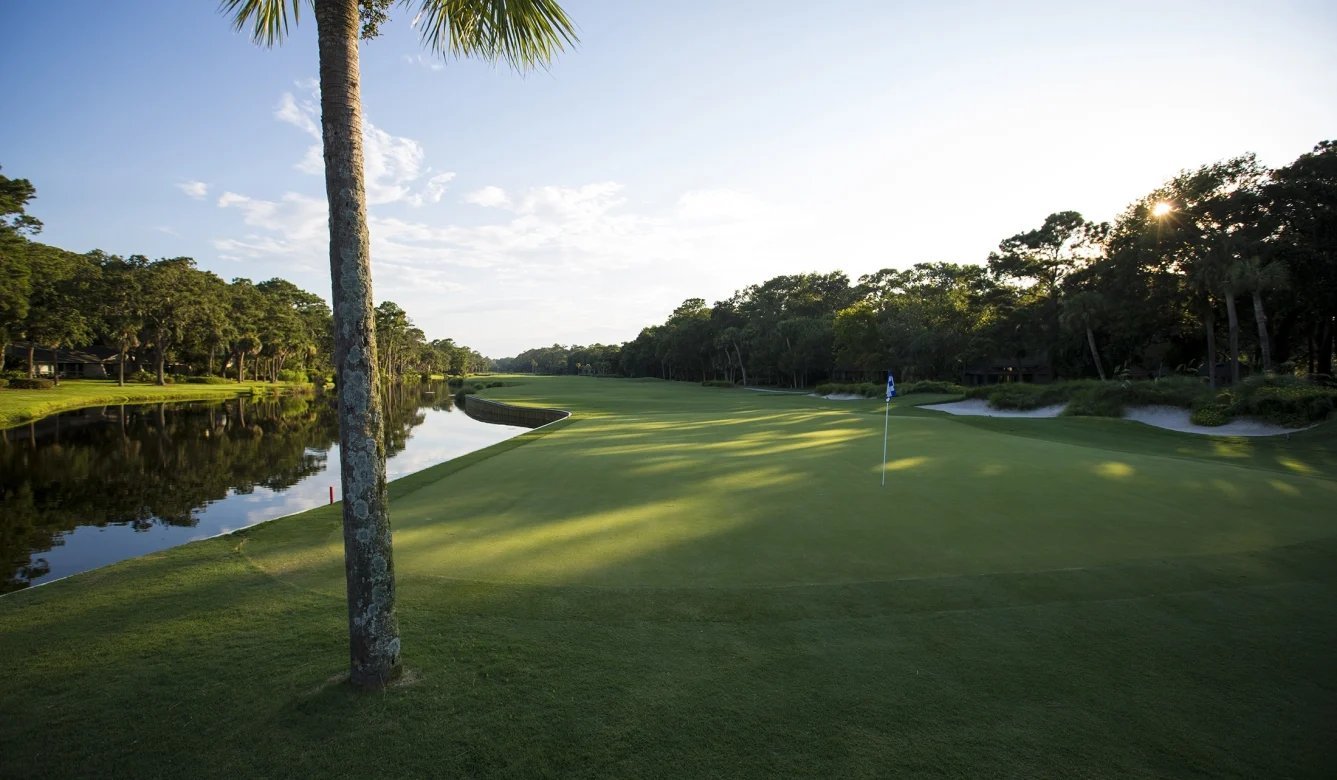
The new experience that Davis Love III created at Atlantic Dunes quickly eclipsed the fame of the Ocean Course, making it more engaging and payable. With a 74.3 course rating and 143 slope across its 7,065 yards, it clearly offers a challenge. And its design puts a premium on control off the tee, with penalty areas that make for an ever-present hazard to wild swings. This becomes even more evident on the back nine, where increasing yardage and greater water hazards demand even more control, particularly on the graveyard of scorecards that is the 18th. But it balances this difficulty with wider greens and a design that takes greater advantage of the prevailing seaside winds.
Ultimately, Love Golf Design did here wasn’t just bring a celebrated old course into the modern era. It enhanced that layout with brilliant design details and new technologies that have made it a perfect counterpoint to the more famed course just up the road at Harbour Town.
Hole-By Hole
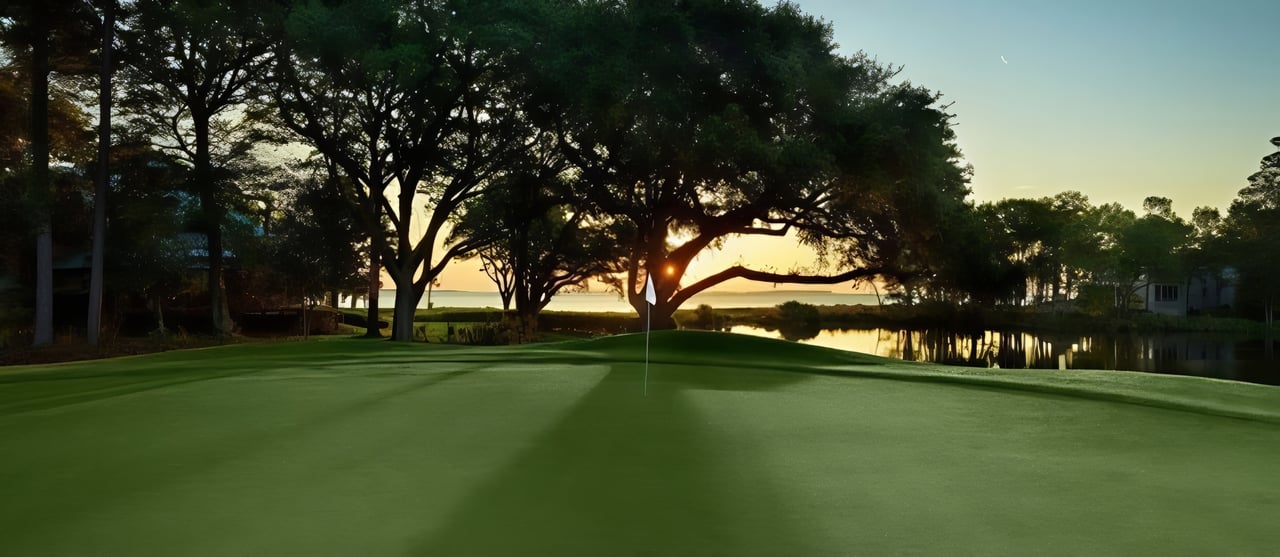
In creating Atlantic Dunes, Davis Love III reframed the scenic corridors of the Ocean Course with Lowcountry accents of seaside grass and coquina shells, modernizing its layout for updated shot values.
Hole 1: Par 4, 397 yards from the Love tees
The first hole offers you a chance to find your rhythm with an extra wide fairway flanked by a wide lagoon across the right. Keep it on the fairway and you’ll have a short approach over bunkers, with a ridge on the right of the green providing a nice backstop while you iron out your approach shot.
Hole 2: Par 4, 402 yards from the Love tees
One of the straightest fairways on the course leads to its largest green, giving players a chance to practice shot control as they navigate around bunkers on the left. If you can land the short approach, the green’s slight ridges make for the easiest birdie to obtain on the course.
Hole 3: Par 3, 188 yards from the Love tees
Leave your driver in the bag for this hole, which packs incredible scenery into its small footprint. The key is to note where the hole has been cut on the “reverse Redan” green, as a sharp ridge across it will either put your right on the hole or drop you to the back.
Hole 4: Par 5, 526 yards from the Love tees
Providing the first opportunity on the course to let your driver rip one down the fairway, the layout of this hole means you can find the green in two if you can stay away from the wide bunker of coquina shells on the left. Then there’s just the three-tiered green to deal with.
Hole 5: Par 4, 388 yards from the Love tees
Navigate the dogleg of the wide fairway and you’re at one of the most challenging greens on the course, with a “punchbowl” at the front to open your approach shot, and deep bunkers along the greens waiting to penalize an errant chip.
Hole 6: Par 4, 459 yards from the Love tees
Winding back toward the clubhouse, this very wide dogleg of a fairway winds toward the green while demanding a straight drive from the tee between a set of principal’s noses bunkers and a wide bank of oak trees. Hit the approach right, and the green will open up from the right.
Hole 7: Par3, 215 yards from the Love tees
The challenge in this hole is less physical as it is mental. A long par three with a large green, its ultimate test comes from knowing where the hole placement is, as a central knob divides the green into different sections that can make long putts a breeze or impossible.
Hole 8: Par 4, 405 yards from the Love tees
While hole placement on 7 determines your approach, it changes your entire strategy on this hole. With several shot options off the tee, whether you place yourself on the left or the right of the green will have a tremendous impact on how you then approach.
Hole 9: Par 5, 535 yards from the Love tees
On the turn, Davis Love III pulled out all the stops in creating a picturesque landscape and giving you plenty of time to take it in. Play toward the left fairway bunker for an easy layup or shoot toward the peninsula green. Careful, sneak water hazards around the green and subtle contours make closing out this hole tricky.
Hole 10: Par 3, 180 yards from the Love tees.
On this whole, getting to the green is the easy part. Dealing with the subtle dips the green contours itself with, as well as the water on all sides, is where the real challenge lies.
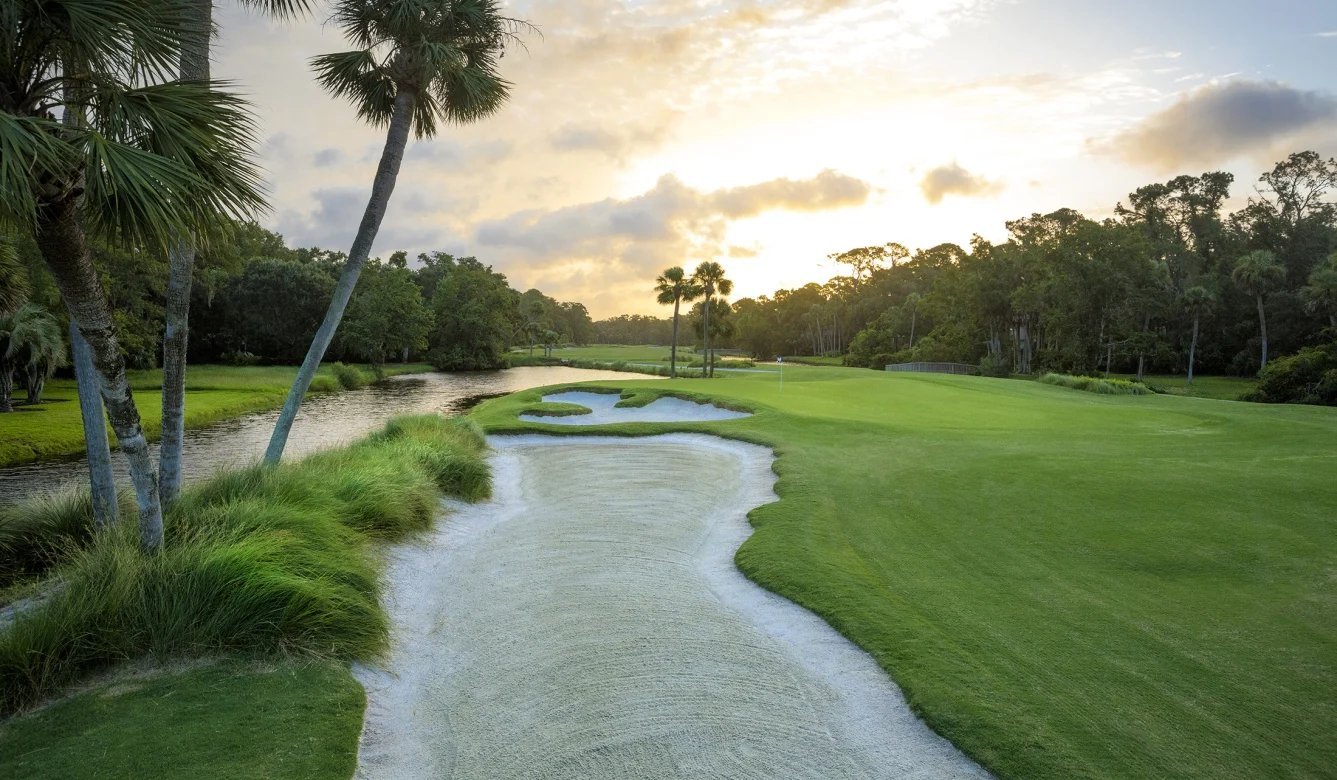
Hole 11: Par 4, 328 yards from the Love tees
The old saying goes, nothing ventured nothing gained. On this whole, you can either play toward the wide landing area by the central bunker or thread the needle between lagoons and bunkers just beyond it. Take the risk, and your reward is an easy approach to a large putting surface.
Hole 12: Par 4, 394 yards from the Love tees
The dogleg of this medium-length hole demands an accurate tee shot. Push it to the right and you’ll have an easy approach to the large green. Push it too far either to the right or the left, and you’ll find yourself in either a deep bunker or one of the intriguing grass hollows.
Hole 13: Par 4, 420 yards from the Love tees
A long fairway gives you plentiful options off the tees, but a shot to the left will provide the best angle toward the smallest green on the course. Thankfully, the gentle contours of the putting surface are very forgiving if it took you an extra shot to get there.
Hole 14: Par 5, 520 yards from the Love tees
At this point, you’ll begin to smell the salt air as the course winds toward the ocean. Breathe it in on a wide fairway that lets you open up your drive safe in the knowledge that there are several different approaches. Keep an eye on yardage, as distance to the punchbowl green can be deceptive.
Hole 15: Par 3, 205 yards from the Love tees
On this majestic hole, you truly get to see Atlantic Dunes live up to its name, forcing approach shots up a hill that rewards you with ocean views and a green tucked among the dunes. Watch for the ever-shifting breezes on this hole, as well as the deepest bunker on the course to the right of the green.
Hole 16: Par 4, 394 yards from the Love tees
Although it’s a par four, this course’s short fairway and multiple options make for a quick approach to the green that suits your style. Watch for the bunker in front of the Lion’s mouth green and figure out which side to land on based on hole placement.
Hole 17: Par 5, 592 yards from the Love tees
This is by far the longest par five on the hole course, and one of the most demanding when it comes the accuracy of your tee shot. Thread the needle and you’ll still be caught between water and wood-planked bunkers as you approach the green.
Hole 18: Par 4, 462 yards from the Love tees
The longest par four at Atlantic Dunes, this hole sprinkles its layout with bunkers and dunes that require precision and planning, culminating in a gentle green that allows for a running shot to par.
A celebration of Hilton Head Island’s natural beauty and the long pedigree of golf in Sea Pines, Atlantic Dunes by Davis Love III bridges the gap between past and future. What Love Design Group created here elevated an already famous course to one that has become celebrated across the state, and set the stage for Love’s later renovations at Harbour Town.
Thinking About Sea Pines?
If golf is part of your decision, Sea Pines also offers Heron Point by Pete Dye, giving buyers another acclaimed course to consider alongside Atlantic Dunes and Harbour Town Golf Links. If club amenities also matter to your decision, Sea Pines Country Club is an important part of the broader Sea Pines lifestyle to consider.
As a Hilton Head native and luxury real estate advisor, I can walk you through what's available, what's coming, and whether Sea Pines is the right fit for your goals. Reach out here — no pressure, just honest answers.