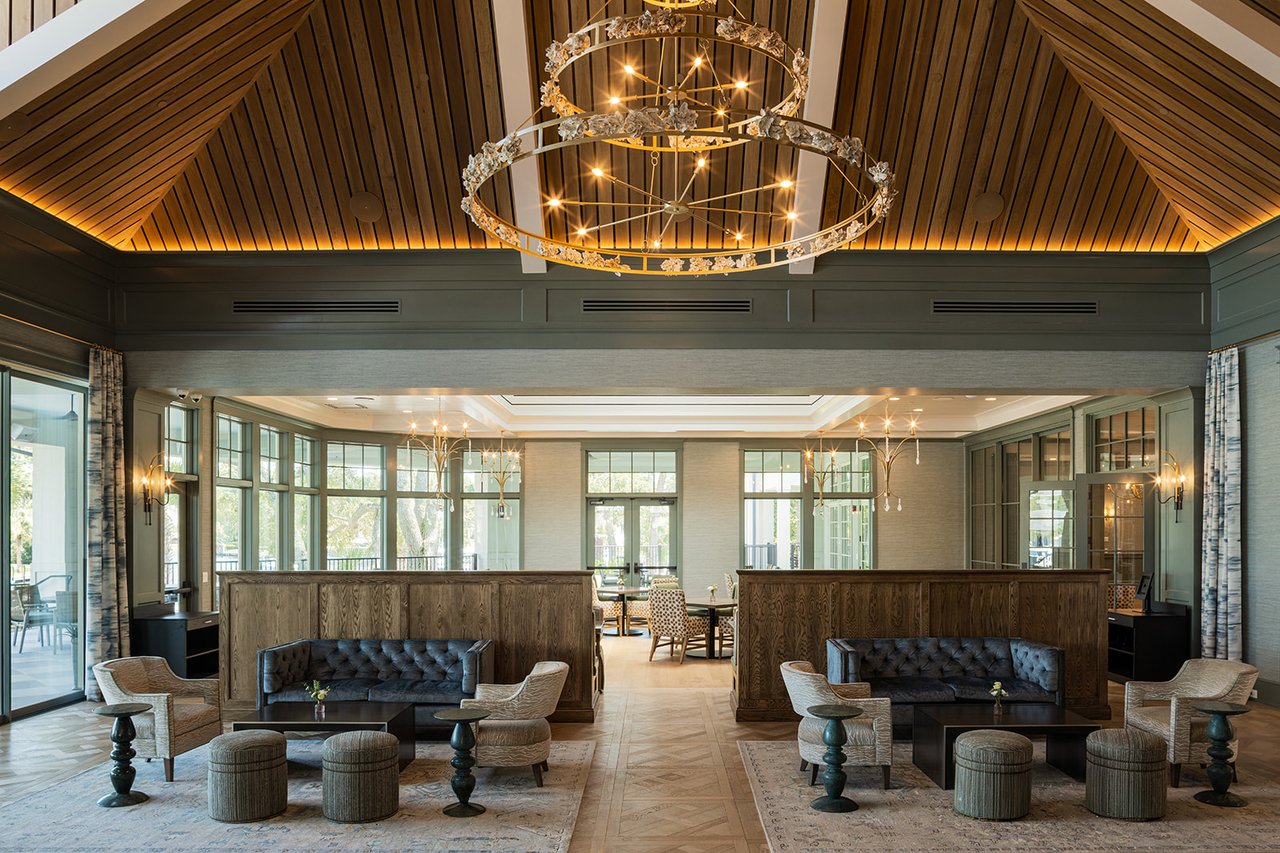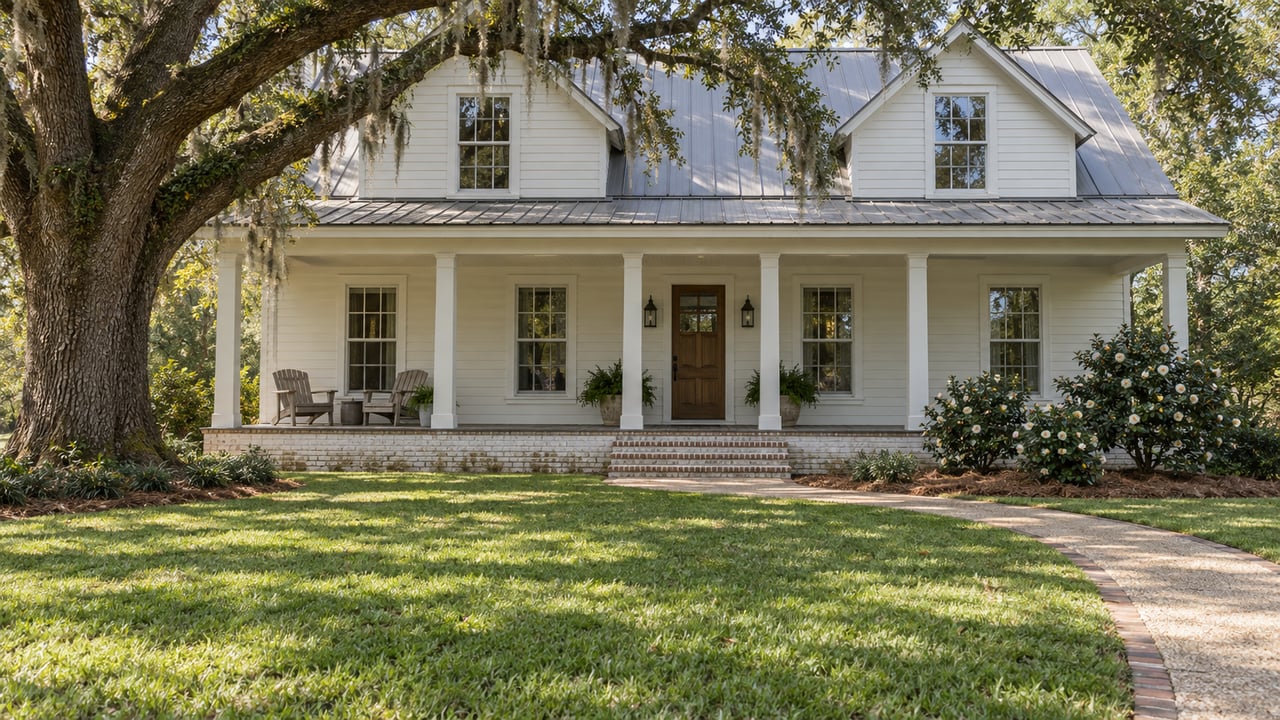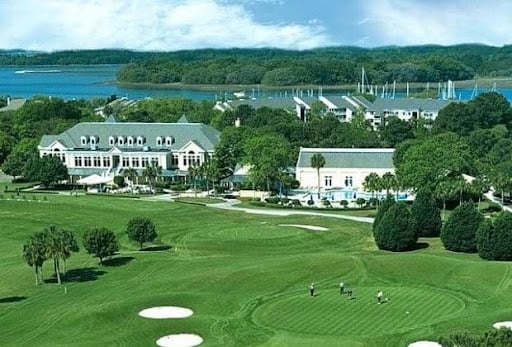
The name Hilton Head conjures an aura of refined exclusivity all on its own. But when you create a private country club environment in the middle of this enclave for the discerning, you reach an entirely different level. Set behind gates, the Country Club of Hilton Head offers exactly the kind of opulent experience you’d imagine from such exclusivity.
As such, its golf course is an experience unto itself.
Blending the demands of championship golf with postcard-perfect Lowcountry scenery, The Country Club of Hilton Head’s Rees Jones-designed course served as the site of the local U.S. Open qualifier in 1999 and 2005. When it opened in 1987, it set a new standard for island golf, winding through pine forests, marshlands and the coast-hugging Skull Creek.
Rees Jones is famed for courses that put a premium on strategic bunkering and thoughtful challenges and he pulled out all the stops along these 18 holes, with a course that forces players to think their way through. Every angle, every club selection, has an outsized impact on your scorecard, with a well-placed shot becoming more and more crucial the closer you get to a finishing stretch framed by marsh views.
If you want a scorecard you can show off and some incredible scenery, you’ll find it here. But you’ll also find a compelling challenge that blends strategy, Lowcountry character and an air of exclusivity.
Learn more about the course and reserve your tee time at their official website, Country Club of Hilton Head.
An Exclusive Lowcountry Experience
Among Hilton Head Island’s gated communities, Hilton Head Plantation offers an atmosphere all its own. Rich with history and bordered by a shoreline that transitions from the shores of Skull Creek to the oceanfront splendor of Dolphin Head, its abundant character lies in its quiet counterpoint to the busier resort corridors of Hilton Head.
That feeling that you’re in a world all its own is a large part of what makes the club experience memorable. While it does operate under a membership-oriented model, the club does open to the outside on a strictly limited basis. Because of this, a tee time here feels like its own reward.
That’s not to say it’s the only reward. Just wait until you step up to the tee and experience what Rees Jones created here. Weaving through tree-lined corridors, strategically placed bunkers, water hazards and tricky greens, its layout keeps things interesting while presenting you with a cohesive design. Each hole presents you with a different question whose answer requires keen concentration.
But perhaps most brilliant is the way Jones incorporated the eye candy into the challenge. Every hole feels rooted into its surroundings, especially in the later holes when water and marsh enter the equation.
A Layout That Rewards Strategy
Under the skillful eye of Rees Jones, Country Club of Hilton Head was expertly crafted to make players think hard about each shot they take. Even the most routine of chip-ons can carry consequences, while tee shots are defined by bunkers and the approach angles they open up.
Across 72 shots at par, players will encounter par fours that demand accuracy, par threes that put distance control to the test and par fives that dare you to take a risk. In some cases, an aggressive line off the tee will yield a birdie chance. In others, a more conservative approach is warranted. Discerning the difference between the two is half the fun.
That balance is established early on by opening holes marked by fairway bunkers that narrow your options and elevated greens ringed by water to make your approach a calculated affair. There are options later down the stretch to recover from any early stumbles, but they still require deliberation.
This is, ultimately, a course that is about much more than length. That’s not to say you won’t find opportunities to exercise a little power off the tee, it’s just that your massive drive won’t necessarily translate to a lower score. This course is all about the angle to the green, the way you navigate hazards and how you manage remaining distance.
That strategic character is particularly appealing to golfers who enjoy shaping shots and managing their way around a course. It also makes the layout approachable for players of different abilities, with multiple tee options allowing golfers to choose a distance that suits their game.
A Finishing Stretch Worth Remembering
As a golf course architect, Rees Jones could be a bit of a showman. And every good showman knows, you always save the best last.
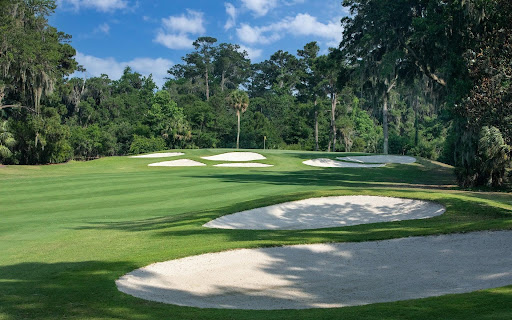
From the signature 12th hole all the way to the clubhouse, the final stretch at Country Club of Hilton Head offers a grand finale of breathtaking coastal scenery. The course’s relationships with the views around it, from scenic marshes to vistas that stretch to the Intracoastal Waterway, give the closing holes a sense of place that stands out even on Hilton Head Island.
With just a few holes standing between you and bragging rights in your foursome, these holes serve as a reminder that the course's challenges and its scenery are often intertwined. The views are beautiful, no doubt, but you can’t let them distract you from carefully planning your lines and your next shots.
Each hole redefines that balance between ambition and restraint, from the forced carry over marsh on 14 to the breezes that creep up on each hole until you reach the 579-yard par-five of the final hole. Taken together, they form a gauntlet that consistently asks golfers to consider more than distance. The scenery may draw your attention, but the design keeps your mind on the game.
Few courses on Hilton Head Island celebrate its beauty while testing your aptitude for making tough decisions. And when you take that scenic drive back through Hilton Head Plantation after a round, don’t be surprised if you’re thinking back on some of those shots, wishing you could try them one more time.
Hole-by-Hole
Hole 1: Par 4, 398 yards from the Gold Tees
Right off the tee, this hole makes its intentions clear with bunkers guarding both sides of the fairway, and a well-protected green demanding a precise approach. Accuracy is key.
Hole 2: Par 4, 413 yards from the Gold Tees
A fairway bunker and OB on the right tells you to favor the left off the tee. Bring another club on your approach to the elevated green and keep a tight grip on your distance.
Hole 3: Par 3, 166 yards from the Gold Tees
From all but the most forward tees, you’re going to need to carry over the first water hazard of the course. With long bunkers and tricky putting surfaces, it’s smarter to aim for the center of the green than chase the pin.
Hole 4: Par 4, 431 yards from the Gold Tees
Power and precision are in order in equal measures on this long dogleg left. Keep right off the tee to avoid bunkers and get a better angle to the green.
Hole 5: Par 4, 358 yards from the Gold Tees
This one is short, but don’t underestimate it. Water guards the front of the green, creating a risk-and-reward situation that can create opportunity or mumbled curses.
Hole 6: Par 5, 491 yards from the Gold Tees
Longer hitters have a tantalizing choice to try to reach in two, cautioned by water along the right. If you’re laying up, look to the oak tree on the left for a more comfortable approach.
Hole 7: Par 3, 171 yards from the Gold Tees
This hole puts a premium on accuracy, with the center of the green holding great rewards. If you’re going to miss, though, miss to the left to avoid the water.
Hole 8: Par 5, 518 yards from the Gold Tees
There is a potential birdie here for the golfer who can navigate the mess of bunkers around the putting surface. Enjoy your drive, because the real challenge starts when you begin planning your approach.
Hole 9: Par 4, 433 yards from the Gold Tees
The front nine ends with a long, narrow par four that demands a solid drive and a controlled approach. You may be tempted to get that birdie on your scorecard, but the risks may just outweigh the rewards of being aggressive.
Hole 10: Par 4, 423 yards from the Gold Tees
A bunker on the left and water on the right of the landing area tells you right from the tee that the back nine doesn’t mess around. Even a great drive will be met with the challenge of a two-tiered green.
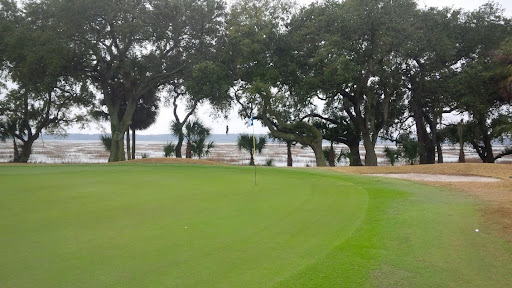
Hole 11: Par 3, 184 yards from the Gold Tees
You might look at the yardage on this one and swing away, but a controlled shot and a wise club selection are the true keys to reaching the green.
Hole 12: Par 5, 575 yards from the Gold Tees
The signature hole on this course earns that distinction through length, strategy and scenery coming together beautifully. The extended layout asks you to play thoughtfully, balancing your attack with careful positioning.
Hole 13: Par 4, 438 yards from the Gold Tees
Framed by fairway bunkers on the left and an OB on the right, a well-controlled tee shot is crucial. Cut the corner to the right if you’re feeling aggressive and bring an extra club for the approach to the elevated green.
Hole 14: Par 3, 185 yards from the Gold Tees
This last par three is a standout test, requiring a forced carry over marsh to an elevated, narrow green guarded by deep bunkers. Aim for the center and hope for the best.
Hole 15: Par 4, 378 yards from the Gold Tees
This slightly uphill dogleg right rewards a well-positioned tee shot. The distance might not suggest a long approach, but the elevated green is a good reason to pack another club.
Hole 16: Par 4, 376 yards from the Gold Tees
With a dogleg left, you’ll need to find the right angle before tackling the elevated green. The nearby lake can give off a stiff wind that will have you adjusting your approach.
Hole 17: Par 4, 402 yards from the Gold Tees
The longer setup on this hole requires careful shot placement for an approach. There is potential for a birdie on the penultimate hole, but you’d better be sure you can accept the risks.
Hole 18: Par 5, 579 yards from the Gold Tees
A fairway bunker on the right lies in wait to punish any errant tee shots, and a two-tiered green adds extra drama to the final approach shot.
Between the quiet natural beauty and subdued atmosphere of Hilton Head Plantation, the upscale surroundings of Country Club of Hilton Head and the strategic brilliance of Rees Jones’ design, this is a course of inimitable atmosphere. Marked by mesmerizing water views and a layout that tests your mental and physical game, it’s a round you won’t soon forget. That is, if you’re lucky enough to score a tee time.
Thinking About Hilton Head Island?
As a Hilton Head native and luxury real estate advisor, I can walk you through what's available, what's coming, and which communities might be the right fit for your goals. Reach out here — no pressure, just honest answers.
Call John Campbell at (843) 816-0627; contact me here.