What’s the one question that savvy travelers ask when they arrive on Hilton Head Island? Naturally, that question is “What do the locals do?” From restaurants to nightclubs to secluded scenic hideaways, everyone wants to know the secrets that only locals seem to know about this island paradise. It’s no different in golf. For those looking to see where the locals work on their handicaps, the answer is Oyster Reef Golf Club.
Far from the bustling tourist areas of the south end, you’ll find Oyster Reef tucked away behind the gates of Hilton Head Plantation. Designed in 1982 by the renowned architect and “Open Doctor” Rees Jones, this 18-hole, par-72 course takes full advantage of its lush Lowcountry surroundings, winding its way through 190 acres of maritime forests, lagoons and marshlands.
While its semi-private nature is part of the appeal to locals (we do love having an in), the public play has made it a favorite among locals and visitors, as well as the wider golf world. Named among Golf Digest’s Best New Courses when it opened, it has held onto that reputation through incredible playability, gorgeous scenery, and relaxed atmosphere.
Learn more about the course and reserve your tee time at their official website, Oyster Reef Golf Club.
A Little Local Love
Part of the reason Oyster Reef Golf Club has enjoyed such a great reputation among local golfers is its position among the island’s other courses. Its Rees Jones design gives it the pedigree necessary to stand among the legendary courses of Hilton Head, but without the pretense. Like that quiet dinner spot away from the resorts, it does away with any air of exclusivity or inflated price tags to deliver a solid experience.
Essentially, it’s a great way to experience golf on Hilton Head Island without planning your entire vacation budget around 18 holes. That’s not to say it’s a bargain course; you get plenty of bang for your buck here.
In creating Oyster Reef, Jones used every club in the bag, relying heavily on doglegs, strategic bunkering and mindfully placed greens to build its challenge. The narrow corridors of fairway slivered between mature trees are a staple of Hilton Head design, to which he added mounds, bunkers and water that force you into planning ahead. And multiple tee sets, ranging from more than 7,000 yards from the back tees to roughly 5,600 yards from the forward tees, let you make the round your own.
That combination is a big part of the course's local appeal. This is a course that can give an accomplished golfer plenty of challenge, while not giving the average player too insurmountable a task. It just requires strategy, and on Hilton Head that’s more valuable than how impressive your scorecard is.
The Crown Jewel and The Closer
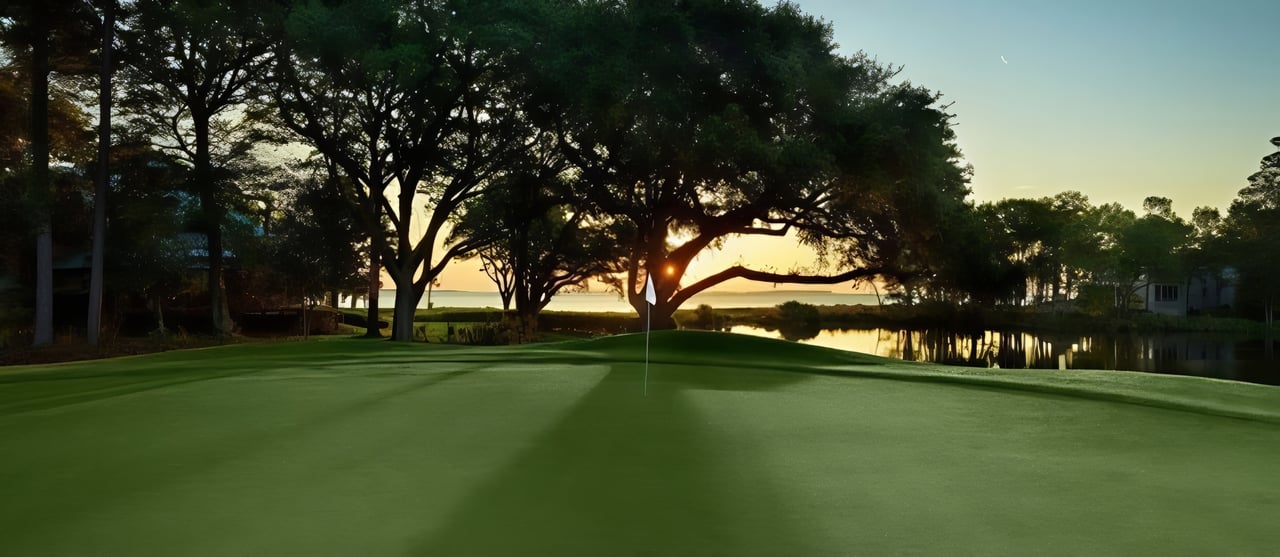
The postcards and tourism brochures on Hilton Head Island always put the signature hole of a course front and center, putting a course’s best foot forward. At Oyster Reef, that show-stealing hole is the par-three sixth.
Backed by the marshes and sparkling waters of the Port Royal Sound, it’s easily one of the most visually stunning holes on the island, punching above its weight with some of its more prestigious neighbors. That scenery can be a double-edged sword when playing 197 yards from the gold tees, distracting you with its beauty and drawing your attention away from the measured concentration that par requires.
The story that this course tells on six is just the warm-up, however. The grand finale is stretched across the final five holes, when the true challenge of this course reveals itself. Rather than relying on any gimmicks or punishing yardage, each hole works with the one before it as a sort of gauntlet. A lot of locals will tell you, your score heading into those final five is almost secondary to how you rise to that final challenge.
Golf That Delivers on Value
For a lot of golfers, a round at Harbour Town is something you treat as a once-in-a-lifetime luxury. Driving down the fairway to the 10th green at Palmetto Dunes’ Robert Trent Jones course is a memorable experience, but one that pretty much dominates your vacation budget. What Oyster Reef offers is something that lets you enjoy a legitimate Hilton Head Island golf experience, with money left over for a few rounds at the Clubhouse and a few bushels of local oysters.
That’s not to say it’s the cheap option. There are certainly less expensive courses out there. Consider it the equivalent of a $100 bottle of wine. It’s not anything that’s going to go on the auction block, but it’s light years ahead of your typical table wine, and ideally suited for a good time. Because beyond playability, pedigree and scenery, that’s what Oyster Reef delivers like few other island courses can.
But it’s all about what that money gets you. Eighteen holes of Rees Jones golf. A layout that offers a completely different experience based on your tee options. A signature hole that stands among the most beautiful on the island. Lowcountry scenery, perfectly blended into the architecture. And, not for nothing, a fantastic 19th hole in the form of LagerHead Tavern.
Hole-by-Hole
Hole 1: Par 4, 375 yards from the gold tees
Easing you into your round with a hole that puts a premium on accuracy, the opening shot’s position plays a crucial role in finding the green.
Hole 2: Par 5, 518 yards from the gold tees
It’s rare to find a hole that lets you open up your drive like this on Hilton Head. Go ahead and show off, but know that the placement plays a crucial role in how you play this one. A slight dogleg left challenges you to land your approach past deep bunkers.
Hole 3: Par 3, 179 yards from the gold tees
A deceptively simple par three, this one pairs a narrow tree-lined fairway with tricky bunkers surrounding the green complex to test your decision-making.
Hole 4: Par 4, 384 yards from the gold tees
A long stretch to the landing zone offers another chance to show off that driver. Keep to the middle of the fairway to shoot the gap between dueling bunkers around the green.
Hole 5: Par 4, 453 yards from the gold tees
You can definitely make up lost ground on this one, which offers the refreshingly simple task of navigating a narrow fairway to a relatively unprotected green.
Hole 6: Par 3, 197 yards from the gold tees
Don’t say we didn’t warn you. The jaw-dropping scenery here can easily distract you from the bunker and water that guard the green.
Hole 7: Par 4, 398 yards from the gold tees
Enough spectacle, back to the golf. Water along the left might push your tee shot right, but keep as centered as possible for approach to a well-guarded green.
Hole 8: Par 4, 425 yards from the gold tees
The variety of the routing becomes apparent right off the tee, with bunkers and trees framing the fairway on a slight dogleg left.
Hole 9: Par 5, 548 yards from the gold tees
The front nine takes a bow with the longest hole on the course, demanding a solid tee shot and a controlled approach on a sharp dogleg toward a greens complex ringed by bunkers.
Hole 10: Par 4, 398 yards from the gold tees
It would be tempting to simply chase distance here, but a well-placed second shot will be far more crucial to navigating the narrow gap between bunkers guarding the green.
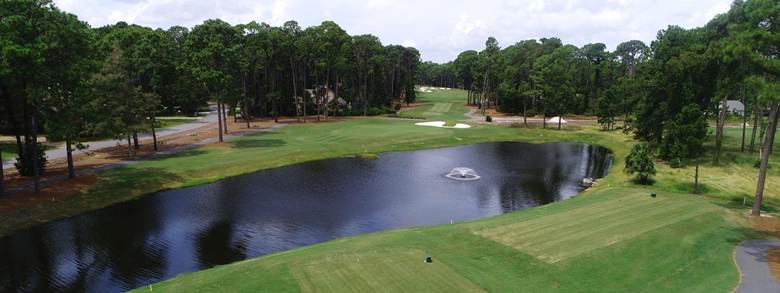
Hole 11: Par 3, 158 yards from the gold tees
Shooting over water, your tee shot needs to be laser-precise to hit a green guarded by bunkers behind. Thread the needle, and a birdie is within reach.
Hole 12: Par 5, 521 yards from the gold tees
A conservative tee shot here could leave you with the best chance for par, between the deep bunkering and trees that cut the left side of your approach.
Hole 13: Par 4, 422 yards from the gold tees
Here’s where the real test begins, with a classic Hilton Head par four, where club selection and a good read on conditions are critical.
Hole 14: Par 4, 379 yards from the gold tees
Right off the tee, you’re met with the decision on how to avoid deep bunkers on the left for the cleanest possible approach to a green shielded by plenty of sand.
Hole 15: Par 5, 536 yards from the gold tees
Go on the attack if you’re looking to make up for lost ground, but be ready to tackle an unwieldy mix of water and sand making your approach shot difficult.
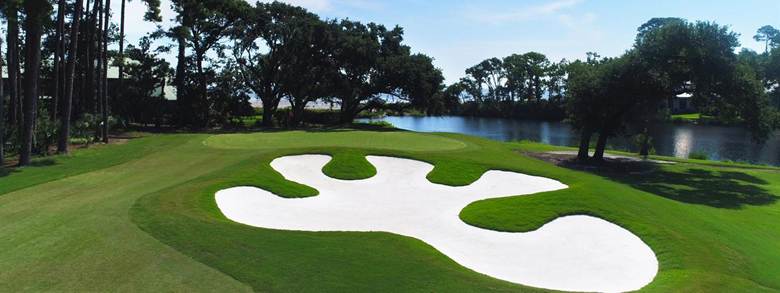
Hole 16: Par 3, 204 yards from the gold tees
The second standout par three provides another memorable lagoon setting and plenty of Lowcountry character. This one’s a local favorite (especially among the kids who dredge the lagoons for balls to sell).
Hole 17: Par 4, 458 yards from the gold tees
A long tee shot over water to a wide fairway gives you a chance to breathe during the final test, before demanding precision into a well-guarded green.
Hole 18: Par 4, 453 yards from the gold tees
The final hole brings it all together, throwing everything at you from trees, bunkers, and tough decisions to ensure you’ve earned that pint at LagerHead.
Oyster Reef made locals its bread and butter, offering an overall enjoyable experience that rewards smart play while offering plenty of chances to let loose with the driver. That playability works well with its pricing, making it a place you can return to again and again and golf like a local. Paired with its impressive architectural pedigree, this authenticity puts it in a category of its own among the island’s storied courses.
Thinking About Hilton Head Plantation?
As a Hilton Head native and luxury real estate advisor, I can walk you through what's available, what's coming, and which communities might be the right fit for your goals. Reach out here — no pressure, just honest answers.
Call John Campbell at (843) 816-0627; contact me here.