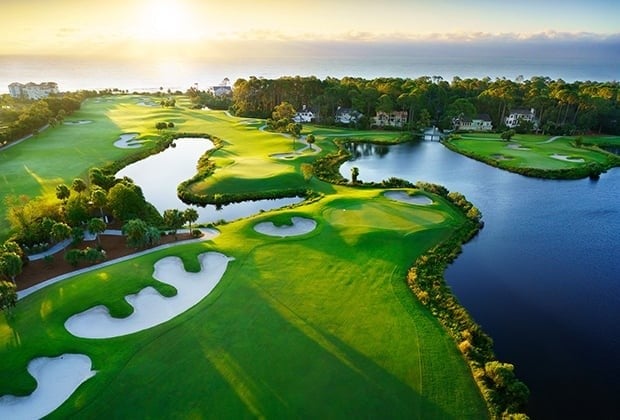
There’s a common misconception among Hilton Head Island visitors that Sea Pines’ Harbour Town Golf Links was the course that started it all when it comes to golf on the island. But a full before Pete Dye had turned over the first shovel full of dirt, Robert Trent Jones was already underway in making his mark in Palmetto Dunes. While this course would eventually be joined by other renowned Palmetto Dunes courses like the George Fazio and Arthur Hills course, it has kept its singular stature as the community’s most iconic 18 holes.
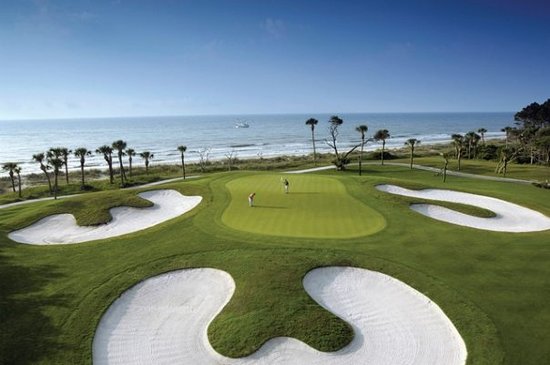
In fact, if there was a single visual shorthand for the entirety of the golf experience in this resort community, it would be the breathtaking 10th hole which brings you 550 yards to the ocean’s edge. And also provides a quick opportunity to sneak over to Coco’s on the Beach.
Following a 2002 renovation by Roger Rulewich, who counted RTJ as his mentor, the course has continued to balance its championship pedigree with a highly playable appeal. What’s more, it has built on that reputation with meticulous conditioning, extensive practice facilities and one of the island's most memorable settings.
A Course That Rewards Smart Decisions
This is a course that will no doubt give your clubs plenty of room to swing, but it’s generosity is only matched by its complexity. Off of every tee, you’re presented with multiple options for shot-making that carry a healthy blend of risk and reward.
The wide fairways may lull you in with a sense of confidence after a monster drive, but you’ll soon find that raw distance won’t nearly be as useful as thoughtful positioning, with many greens sneakily rewarding certain angles.
With Palmetto Dunes’ famed 11-mile lagoon system winding throughout the resort, water is definitely a fact here, with multiple hazards playing an outsized role in play, while never overwhelming.
But of course, this is a Robert Trent Jones course, so you can expect sprawling bunkers around key landing zones and protecting green complexes. And even when you reach the green, you’ll find yourself up against the course’s strongest defenses with subtle contours that put a premium on precision iron shots and brave putting.
That layout has formed a large part of the Robert Trent Jones course’s reputation on Hilton Head Island. While many of the island’s courses punish you with deep roughs and narrow corridors, this one challenges you to make the smart shot in tackling its wide fairways. Aggression can take you far on this course, but it is patience and disciplined course management that will yield the best scores.
Golf Beside the Atlantic
Coastal surroundings are, pardon the pun, par for the course when it comes to Hilton Head Island. What makes the Robert Trent Jones course differently is how beautifully it embraces this, fitting for the resort atmosphere of Palmetto Dunes.
Despite Robert Trent Jones being a notoriously bulldozer-happy course designer, with his signature course in Palmetto Dunes Framing much of the routing you’ll find sparkling lagoons, creeks winding through salt marshes and centuries old live oaks, with the course carefully landscaped to showcase this Lowcountry atmosphere.
As such, you’ll often find your gallery consists of the great wildlife of the Lowcountry: blue herons, egrets, and turtles among the marshes. Dolphins and seagulls playing just beyond the shoreline. And, yes, the odd alligator making an appearance beside a lagoon, but only as a reminder that these landscapes are as much their home as it is one of golf’s great masterpieces.
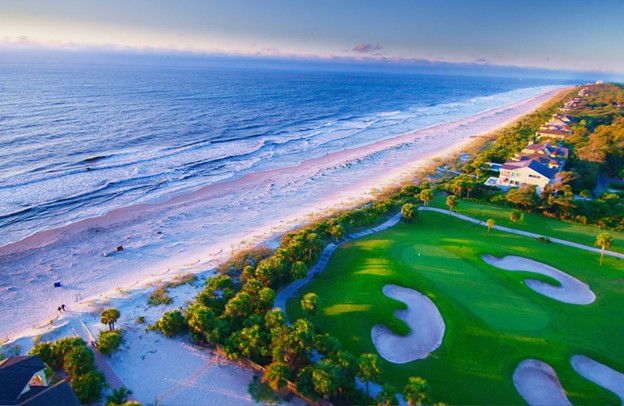
While the interior holes showcase classic Hilton Head scenery, anticipation steadily builds throughout the back nine toward one of the most celebrated turns in the Lowcountry. The eighteenth hole emerges dramatically along the Atlantic Ocean, offering one of only a handful of true oceanfront golf holes on Hilton Head Island.
Just keep an eye on the stiff winds coming off the water. As Palmetto Dunes’ director of instruction Doug Weaver is fond of saying, “If it’s breezy, take it easy.”
A Championship Experience for Every Golfer
Much like the resort that surrounds it, Robert Trent Jones was built to welcome all comers. Yes, this is a course that has hosted a slew of prestigious tournaments, pro events and collegiate championships, but its strength truly lies in its accessibility.
Multiple tee boxes allow players of every ability to enjoy the layout, which was extended during renovations beyond 7,000 yards from the championship tees while still offering significantly shorter options for weekend warriors.
A quality shot is a quality shot, and the excellent maintenance of smooth greens, firm fairways and manicured bunkers will reward quality. As such, it remains encouraging for all players while stilling demanding solid execution, challenging both vacationers and true competitors to book a repeat round and dabble in different strategies.
Even sticking to the same strategy can yield dramatically different results from one round to the next thanks to the ever-changing coastal breezes that weave their way down each hole. That variety keeps players coming back, while always keeping you on your toes.
Hole-by-Hole
Hole 1: Par 4, 398 yards from the gold tees
A welcoming opening straightaway with a generous landing area, this hole’s fairway treeline rewards players who favor placement over power.
Hole 2: Par 4, 387 yards from the gold tees
The tight driving lane calls for a fairway metal or long iron, with the landing area separated by water from the simple funneled green.
Hole 3: Par 4, 370 yards from the gold tees
With a tree-guarded fairway, a dogleg to the right and unique square green guarded on three sides by bunkers, this hole exemplifies the cerebral challenge of this course.
Hole 4: Par 5, 582 yards from the gold tees
The longest hole on the course still allows big hitters access to the green in two if they can navigate the bunkers that line the right of the fairway.
Hole 5: Par 3, 204 yards from the gold tees
The first pair three has you threading the needle between large trees and a deep bunker to the right and sand on the left.
Hole 6: Par 4, 422 yards from the gold tees
This hole, as they say, separates the men from the boys. Land on the left of the fairway and you’ll have a clearer approach to the elevated two-tiered green, but know that you’ll need an extra club.
Hole 7: Par 4, 410 yards from the gold tees
Drive with care. You’ll need to clear water before finding your landing zone beside bunkers. And even then, the approach to the narrow green flanked by bunkers had better be precise.
Hole 8: Par 3, 227 yards from the gold tees
With the sea breezes picking up on this hole, and water between you and the green, it’s still the putting surface that poses the biggest challenge with a sharp spine down the green’s center and front and rear bunkers.
Hole 9: Par 5, 522 yards from the gold tees
The first in the course’s signature back-to-back par fives urges you to balance precision and distance with a dogleg right that lies against the largest lagoon in the course.
Hole 10: Par 5, 550 yards from the gold tees
This hole begins with a demanding driving hole framed by mature trees and bunkering, and ends with one of the most spectacular views on Hilton Head Island.
Hole 11: Par 4, 405 yards from the gold tees
You might breath easy now that the prevailing winds are at your back, but that only means a lighter touch is needed for accuracy down the hill to the green.
Hole 12: Par 3, 168 yards from the gold tees
The shortest hole on the course offers a potential one-shot to a long and narrow putting surface running left to right.
Hole 13: Par 4, 398 yards from the gold tees
This hole’s lagoons have been keeping local kids in business for years, as they fish out balls mislaid by drives that are anything less than accurate.
Hole 14: Par 4, 443 yards from the gold tees
This hole is notorious on the back nine for its heady mix of long length, cross breezes and multiple hazards, leading to a tricky putting surface split by a ridge.
Hole 15: Par 5, 531 yards from the gold tees
The layup is everything on this hole, with a fairway pinched between water and out of bounds. Play it safe and a birdie is highly possible.
Hole 16: Par 4, 386 yards from the gold tees
Well-placed bunkers shape strategy while rewarding players who find the proper side of the fairway, far from the wide bank of trees.
Hole 17: Par 3, 204 yards from the gold tees
A memorable short hole where swirling coastal winds and a trio of bunkers conspire to trick your shot to the right, where it will end up underwater.
Hole 18: Par 4, 407 yards from the gold tees
One of Hilton Head Island's signature finishing holes, running along the Atlantic Ocean and providing a spectacular conclusion to the round. Don’t let the scenery distract you from OBs on either side of the fairway and a green that rolls sharply back to front.
The Course’s Lasting Appeal
As the first course on the island, The Robert Trent Jones Course has held onto its relevancy and added to its reputation through thoughtful renovation of a course that brings you back again and again.
Jones’ brilliant architecture finds its perfect complement in the Lowcountry’s natural beauty in the middle of an always-lively resort, with one of the most memorable finishing holes in the entire Southeast.
Even if it’s a course you’ve tackled before, the wind is always changing. And with each new breeze, this course finds new ways to challenge and delight.
Thinking About Palmetto Dunes?
As a Hilton Head native and luxury real estate advisor, I can walk you through what's available, what's coming, and whether Sea Pines is the right fit for your goals. Reach out here — no pressure, just honest answers.