Buying a home along the marsh or river should feel exciting, not risky. Still, coastal properties can carry unique wrinkles in ownership history, boundaries, and use rights that are easy to miss until they become a problem. If you are eyeing a home in Colleton River Plantation or Hilton Head Island, you want clarity on what title insurance actually covers, what it does not, and how to safeguard your closing. In this guide, you will learn the essentials and the Lowcountry specifics so you can move forward with confidence. Let’s dive in.
Title insurance basics
Title insurance protects you from loss caused by defects in the property’s title that existed before closing. These issues might include forged documents, recording mistakes, or a hidden lien that did not show up in the initial search. You pay a one-time premium at closing for protection that lasts as long as you own the property.
You will typically see two policy types. A lender’s policy protects the mortgage lender up to the loan amount and is usually required if you finance. An owner’s policy is optional but strongly recommended because it protects your ownership up to the purchase price. For a plain-English overview of policy differences, review the CFPB’s consumer guide and the ALTA explanation of owner and lender coverage.
Before issuing a policy, the title company completes a public-records search and provides a title commitment. This preliminary report outlines what the policy will cover and what it will exclude, plus any curative steps needed before closing. Ask your title professional for a clear quote that reflects the base premium and any endorsements you may add.
What title insurance covers and excludes
A standard owner’s policy typically covers problems like forged or improperly executed documents, undisclosed or missing heirs who later claim ownership, and clerical errors in the public record. It can also address unknown liens, unreleased prior mortgages, or certain easements that were not discovered.
There are important limits. Standard policies usually do not cover zoning or building code compliance, environmental contamination, flood risk, or anything a current, accurate boundary survey would show unless you purchase a survey-related endorsement. Unrecorded rights, such as informal access agreements or certain prescriptive uses, are also commonly excluded.
Quick coverage snapshot
- Often covered: forgery, fraud in the chain of title, recording mistakes, undisclosed heirs, unknown liens, and certain legal description errors.
- Commonly excluded: zoning or code violations, environmental issues, flood damage or flood insurance requirements, permitting problems, and survey-only matters unless endorsed.
Lowcountry coastal risks to watch
Waterfront and marsh-adjacent properties in Colleton River Plantation and Hilton Head Island offer a rare lifestyle. They also sit within a dynamic environment that can complicate title and use rights. A careful title search, current survey, and the right endorsements help you avoid surprises.
Shoreline and tidal boundaries
On tidal waters, boundaries can relate to tidal marks and navigability rules. Accretion, erosion, or sudden changes from storms can shift shorelines over time, which may create boundary questions. Public trust principles can limit private ownership or access rights seaward of certain tidal lines. Pair the title search with a current survey, and consider reviewing NOAA tidal datums for long-term context on water levels and shoreline change.
Docks, bulkheads, and riparian access
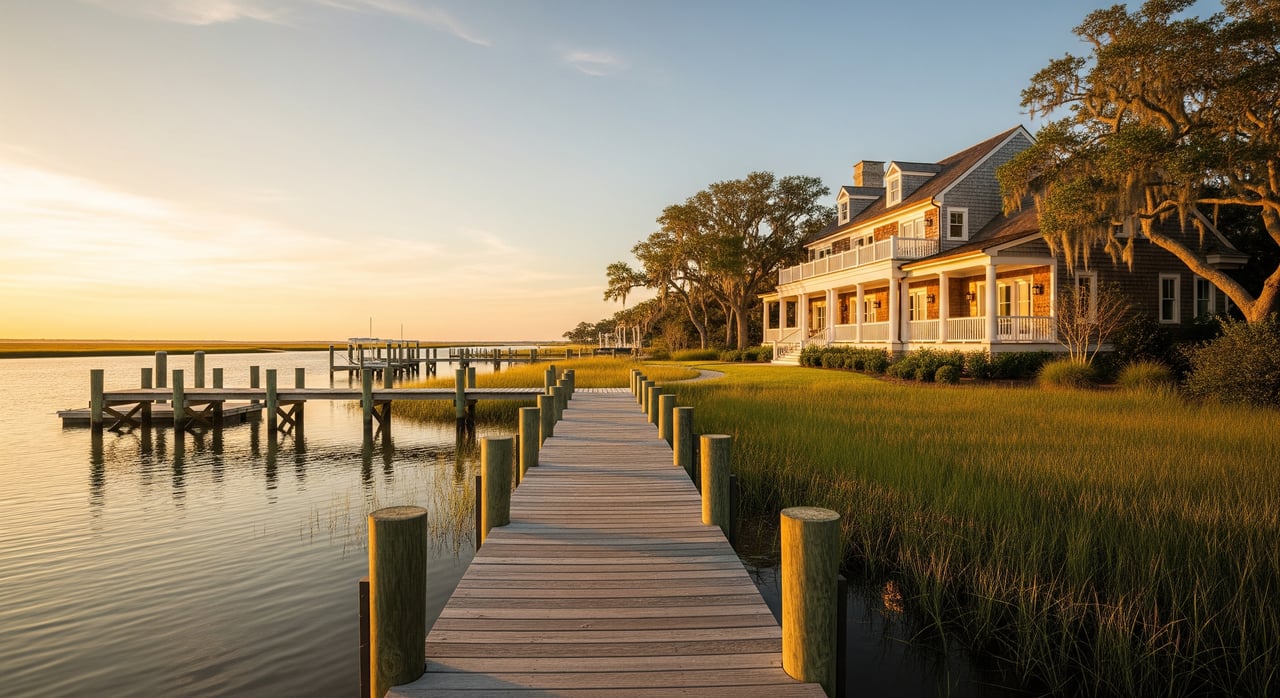
Docks, piers, and shoreline structures often require state and federal approvals. When buying, confirm whether permits or recorded rights are in place, especially if a structure needs repair or replacement. You can check permit frameworks through SC DHEC’s Office of Ocean and Coastal Resource Management and the U.S. Army Corps of Engineers Charleston District. Community boat slips may be tied to specific lots through recorded easements or agreements, so ask your title professional to pull those documents early.
Marsh, wetlands, and environmental regulation
Tidal marshes and wetlands are regulated at multiple levels. These are not title defects, but they affect how you can use or improve a property. Expect recorded restrictions or references to permitting in your title commitment. Plan early conversations about future improvements with your title company, and consult local planning and permitting guidance if you intend to add or modify shoreline features.
Floodplain mapping and elevation
FEMA flood zones influence insurance requirements and financing. Title insurance does not cover flood damage, so it is smart to confirm designations through the FEMA Flood Map Service Center and secure an elevation certificate when needed. Your lender and insurance agent will use these documents to determine coverage and costs.
Community covenants and assessments
Gated and amenity-rich communities typically have recorded covenants, bylaws, and assessment obligations. Expect your title commitment to list these as exceptions. Review them for maintenance obligations related to bulkheads, community docks, and special assessments that could impact your budget.
Easements and access ways
Private roads, shared driveways, and water access paths are common. Ensure recorded easements match how the property is used today. If language is ambiguous, discuss an access or use endorsement and rely on a current survey to confirm what lies on or across your lot.
Searches, surveys, endorsements, and gap coverage
A strong closing in the Lowcountry starts with thorough records review, a current survey, and targeted endorsements to fill typical coastal gaps.
Records to review
Ask your title professional to verify the full chain of title, recorded plats, amendments, and any subdivision maps. They should confirm recorded easements, rights of way, covenants, and community declarations. It is smart to confirm tax status and check for undischarged liens or releases.
If you are researching documents yourself, look to the Beaufort County Register of Deeds and, when relevant, the Colleton County Register of Deeds. For consumer questions on how title insurance is regulated, the South Carolina Department of Insurance provides state-level resources.
Why a survey matters
A current ALTA/NSPS survey is strongly recommended for waterfront lots. It shows boundaries, improvements, easements, encroachments, and the relationship to tidal lines or marsh edges. If your title commitment includes a general survey exception, a survey endorsement can narrow that exception and add protection around boundary and encroachment risks.
Endorsements worth considering
Endorsements refine your coverage to fit the property. In our coastal market, you might discuss:
- Survey or plat endorsement to address survey-only matters.
- Boundary or encroachment endorsement for dock, seawall, or fence disputes.
- Access and use endorsements to confirm vehicular and pedestrian access.
- Limited zoning endorsement to confirm current classification.
- Mechanic’s lien or tax parcel endorsements when available through your insurer.
Availability and cost vary by insurer and state. Your title professional will advise what is customary locally.
The gap period around closing
There is a short window between the date of the title search and when your deed and mortgage record after closing. Ask about interim or “gap” protection for this period. Many title companies provide gap coverage so that newly filed issues do not slip through in that window.
Typical coastal claim scenarios
Seeing the patterns can help you avoid them. Here are issues that often surface after closing when protection is thin:
- Hidden liens or undischarged prior mortgages that were missed or released improperly.
- Boundary disputes tied to shifting marshlines, accretion or erosion, or encroachments by docks and seawalls.
- Forgery or identity issues in an older link in the chain of title.
- Unrecorded access agreements or claims of prescriptive rights by neighbors.
- Disputes over riparian rights, dock placement, or the use of submerged lands.
- Regulatory disputes for unpermitted coastal work, which are outside standard title coverage but can affect property use.
Buyer checklist for Colleton River and Hilton Head
Use this list to keep your due diligence on track.
- Order an owner’s title policy at closing and review the title commitment early with your agent and title attorney.
- Request an ALTA/NSPS survey and ask for a survey endorsement if your commitment carries a survey exception.
- Review HOA or POA covenants, budgets, pending assessments, and shoreline maintenance obligations.
- Confirm FEMA flood zone through the FEMA Flood Map Service Center and secure an elevation certificate if needed.
- Ask about any recorded shoreline reservations, tideland patents, or state claims noted in the commitment.
- Verify that docks, bulkheads, or boat slips have recorded permits or leases; check with SC DHEC OCRM and the U.S. Army Corps as relevant.
- If you plan additions or changes, consider a limited zoning endorsement and speak with local planning to understand approval paths.
Seller checklist to avoid delays
A smooth closing starts well before the first showing.
- Resolve known liens, unpaid taxes, and judgments before you list.
- Provide a recent survey if available and disclose any known encroachments.
- Keep HOA or POA dues current and gather governing documents and budgets for buyers.
You can also consider a pre-listing inspection. A realtor can tell you everything you need to know about getting your home inspected before selling to help you identify issues early, decide what to repair, and reduce the chance of surprises during the buyer’s due diligence period.
How a trusted local advisor helps
Every property along the Lowcountry coast tells a story, especially when water, marsh, and community amenities intersect. A thoughtful closing team will anticipate the title details that matter most and bring in the right survey, endorsements, and documents at the right time. With the right preparation, your waterfront dream can close cleanly and stay protected for years.
If you are planning a purchase or sale in Colleton River Plantation, Hilton Head Island, or nearby communities, let’s make your move seamless. For hyper-local guidance and a smooth closing experience, connect with John Campbell. Get your instant home valuation, explore listings, and tap into a concierge-level process designed for the way you live.
FAQs
Do I need owner’s title insurance for a Lowcountry waterfront home?
- A lender will require a lender’s policy, and an owner’s policy is strongly recommended because coastal properties face added risks like tidal boundaries, docks, and complex easements.
Will title insurance cover flood damage or storm surge?
- No. Title insurance protects against defects in ownership and recorded liens, not physical damage; use flood and homeowners insurance for property damage coverage.
What survey should I order for a Colleton River or Hilton Head property?
- An ALTA/NSPS survey is the standard for coastal lots because it maps boundaries, improvements, easements, encroachments, and the relation to tidal lines.
Which endorsements are most useful for coastal properties?
- Ask about survey or plat, boundary or encroachment, access and use, and limited zoning endorsements; availability varies by insurer and state.
Where can I check permits for a dock or bulkhead?
- Start with SC DHEC OCRM and the U.S. Army Corps Charleston District for the permitting framework and recorded approvals.
How do I verify recorded covenants and easements before I buy?
- Your title company will pull them, and you can search county records through the Beaufort County Register of Deeds and the Colleton County Register of Deeds when relevant.