Most afternoons, the water inside Windmill Harbour's lock sits about as still as a pond. Then Wednesday comes, and by early afternoon thirteen identical white hulls are tacking across the harbor in tight formation, sails snapping, someone on a dock shouting a time check to no one in particular. This happens most weeks of the year, which is the part that surprises people who assume racing here is an occasional spectacle rather than a standing appointment.
That distinction matters more than it sounds. Windmill Harbour is often described the way every gated Lowcountry marina community gets described: private, exclusive, water-oriented. What that description misses is the specific mechanic that makes the water here function differently than at other Hilton Head marinas, and why a homeowner who never sets foot on a boat still ends up organizing part of their year around a racing calendar they didn't sign up for.
The Lock Is the Reason the Wednesdays Work
Windmill Harbour sits on Jenkins Island at the edge of the Intracoastal Waterway, built around a 15-acre inland harbor that connects to open water through a lock system. The community counts itself among only three harbors on the entire East Coast that use one. A lock keeps the inner harbor's water level constant regardless of tide, which is a practical engineering detail until you notice what it does socially: it turns the harbor into a controlled, protected racecourse rather than an open tidal creek where conditions shift by the hour.
That's why the South Carolina Yacht Club can run a Harbor 20 fleet of thirteen identical one-design boats on Wednesday afternoons and stack up more than 200 races a year without the schedule getting swallowed by weather or current. The boats are matched, the water is level, and the racing becomes less about who owns the fastest hull and more about who reads the wind best that particular afternoon. Club membership isn't required to own property here, which is unusual for a gated amenity community on this island, but the Wednesday races don't need spectators to buy in. They just need somebody to look out a window.
A Calendar Built Around Three Weekends, Not One
The Yacht Club, founded in 1989 and now a member of the South Atlantic Yacht Racing Association, organizes its competitive season around three named regattas rather than a single marquee event. The Harbor 20 Spring Regatta runs in May. Spar Wars takes over in August. Ocean Challenge closes the season in October.
That spacing tells you something about how the community actually uses its water. A single big regatta would function as a tourist-facing showcase, the kind of thing a marina stages once a year for photos and press. Three regattas spread across spring, summer, and fall function as a resident's calendar instead, the same way a golf community tracks its member-guest tournaments or a beach town tracks its shoulder-season events. Spring gets the fleet back in shape. Summer tests it under Spar Wars conditions. Fall sends it out past the lock entirely.
That last part is the one most people miss.
Ocean Challenge Takes the Race Outside the Harbor
Where the Wednesday series and the spring and summer regattas stay largely inside the protected harbor, Ocean Challenge in October moves racing into Calibogue Sound, the open water just off Windmill Harbour where currents, wind, and boat traffic are all live variables the lock system was built to avoid. The regatta draws a wider mix of boats than the one-design Wednesday fleet, with One Design Harbor 20s racing alongside Melges 15s, J105s, J24s, and PHRF spinnaker and non-spinnaker classes.
It's the one weekend a year when Windmill Harbour's usually contained racing scene spills into water shared with the rest of the island's sailing community, and it's worth watching for exactly that reason. The calm, controlled version of sailing that defines the other fifty-one weeks gives way to a rougher, faster, more exposed one, and residents who've spent all summer watching Harbor 20s glide across level water get to see what the same boats look like fighting real conditions in the Sound.
Membership Is Optional. Participation Isn't, Really.
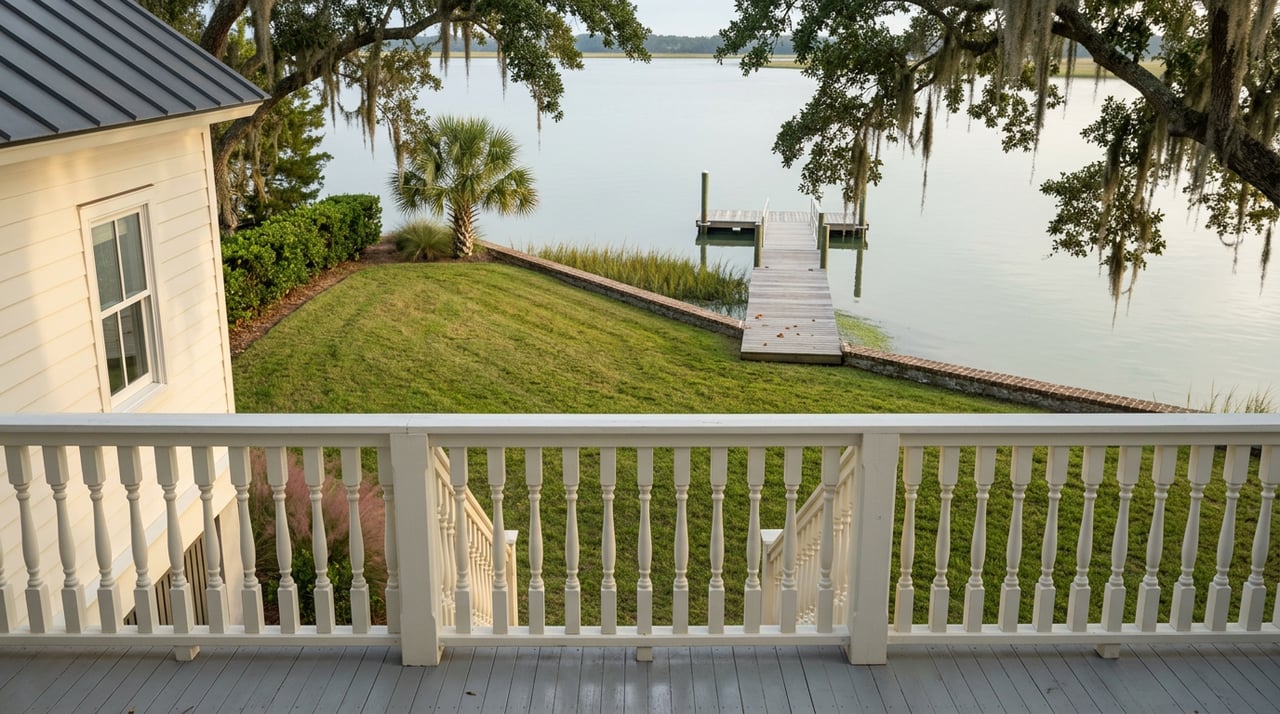
Here's the detail that changes how you should think about this neighborhood if you're evaluating it purely by its amenity list. Membership in the South Carolina Yacht Club is optional for property owners in Windmill Harbour, not a mandatory dues line the way it is in many other gated communities on the island. That structure means the club functions less like a walled-off private amenity and more like a shared civic institution that happens to sit inside a gate. You can own a home on the harbor, never join, and still watch the entire competitive season play out from your own dock, because the racecourse is the harbor itself.
For the members who do join, the club adds a social layer around the racing rather than replacing it. Casual dining runs through the Blue Fish, formal occasions move to the Catesby, and a standing wine society hosts special dinners in the club's Wine Cellar. Land-side, seven Har-Tru tennis courts including a stadium court host exhibitions from area teaching professionals throughout the year, and a cruise fleet organizes monthly outings for members who want to get underway together outside race conditions.
None of that requires racing to matter, but it explains why the Wednesday series draws the crowd it does. The club isn't asking non-members to opt into anything. The boats are just out there, on schedule, in a harbor small enough that everyone with a water view already has a seat.
The Non-Racing Calendar Runs on the Same Logic
Windmill Harbour's Property Owners Association keeps its own set of traditions running alongside the club's racing schedule, and they follow the same pattern of being genuinely resident-facing rather than staged for outside visitors. The Harbour Stroll brings property owners and the Yacht Club together each year to decorate for the holidays. A community Yard "Sail" runs each spring. A Fourth of July parade moves through the neighborhood's 348 Charleston-style homes on Jenkins Island.
None of these require a boat, a club membership, or even much planning. They're the kind of low-key, recurring markers that tell you a community's social calendar is built by the people living there rather than imported from a resort playbook. Combined with the racing schedule, they add up to a year with real texture to it, spring sail, summer regatta, holiday stroll, October's open-water finale, rather than a single peak season and eleven quiet months.
What the Rhythm Tells You
The thing that makes Windmill Harbour distinct isn't that it's a marina community with a yacht club, plenty of those exist up and down this coast. It's that the harbor's engineering, the lock, the fixed water level, the protected inner basin, produces a racing culture that runs on a weekly cadence most weeks of the year, optional to join but nearly impossible to miss from a dockside window. Three regattas give that weekly rhythm its punctuation, and October's Ocean Challenge is the one weekend the calm inner harbor version of the sport gives way to something rougher out in Calibogue Sound.
If you already live here, none of this is news, you've heard the Wednesday afternoon rigging clatter and probably know which boats tend to finish first. If you're weighing whether a harbor like this fits how you actually want to spend your weeks on the water, that Wednesday-to-October arc is worth understanding before the regatta dates, because it's the difference between a community that has a marina and one that's actually organized around it.
If you're curious what a home on this harbor is worth in today's market, or want a closer look at what's currently available inside the gates, John Campbell can walk you through it. Get Your Instant Home Valuation to see where your Windmill Harbour property stands.